
Blog
Energy-Saving Window Film Industry Integration Trend Becomes Prominent

The energy-saving window film industry is showing an obvious trend of industrial integration in recent years, with in-depth cooperation between upstream and downstream industries, cross-industry integration and application, and the formation of a more closely connected industrial ecosystem. The integration of the industry has broken the traditional single development model, promoted the optimal allocation of resources, technological innovation and market expansion, and injected new vitality into the high-quality development of the energy-saving window film industry.
The integration of upstream and downstream industrial chains is the core content of industrial integration. Upstream raw material suppliers, midstream window film manufacturers and downstream application enterprises have strengthened strategic cooperation, established long-term and stable supply and demand relationships, and jointly carried out product research and development and technological innovation. Raw material suppliers provide high-performance and environmentally friendly raw materials according to the needs of manufacturers, manufacturers develop customized products according to the application scenarios of downstream enterprises, and downstream enterprises feed back market demand and application experience to promote the optimization and upgrading of products. This upstream and downstream linkage model has improved the efficiency of the industrial chain, reduced production costs, and enhanced the overall competitiveness of the industry.
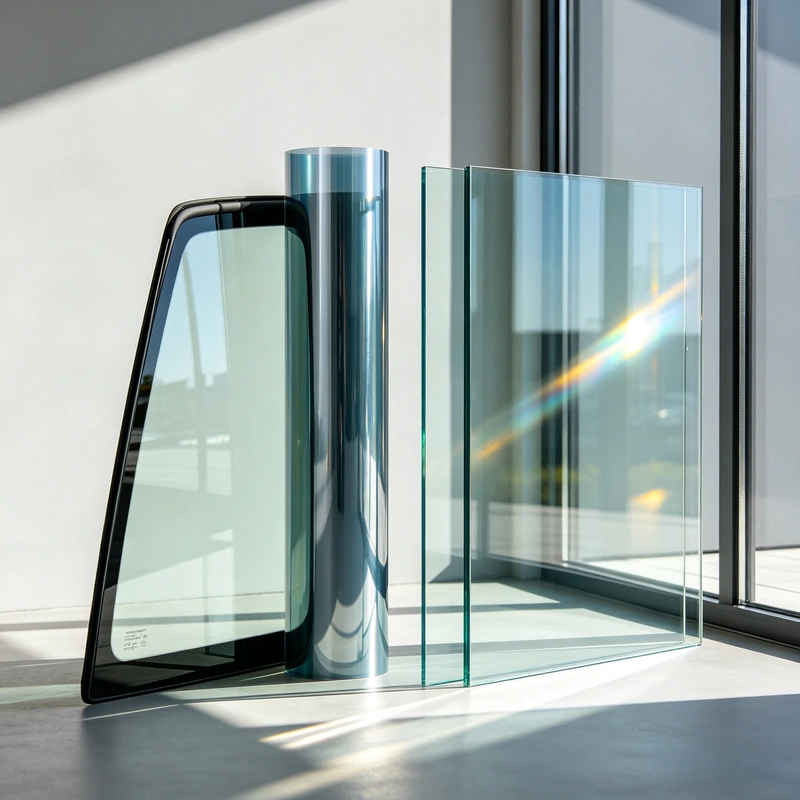
Cross-industry integration and application have expanded the development space of the energy-saving window film industry. Window film products are deeply integrated with the automotive industry, construction industry, materials industry and other fields, forming a variety of cross-border application scenarios. In the automotive field, energy-saving window films are integrated with automotive glass manufacturing, automotive interior design and other links to provide integrated solutions for automotive energy saving and comfort improvement; in the construction field, they are integrated with building curtain walls, energy-saving renovation and smart buildings to become an important part of building energy-saving systems; in the materials field, they are combined with new functional materials to develop composite products with more excellent performance.
The integration of brand and market resources has also accelerated the integration process of the industry. Some powerful enterprises have realized the expansion of scale and market layout through mergers and acquisitions, strategic alliances and other forms, optimized the industrial structure, and improved market concentration. At the same time, brand enterprises have strengthened cross-regional and cross-border market cooperation, promoted the mutual integration of domestic and foreign markets, and enhanced the international influence of China’s energy-saving window film industry.
The deepening of industrial integration has put forward higher requirements for technological innovation and management level of enterprises. Enterprises need to strengthen cross-field technical research and development, break through technical barriers between industries, and improve the ability of integrated innovation. At the same time, they need to optimize management models, improve resource integration capabilities, and adapt to the development needs of industrial integration. In the future, with the further advancement of industrial integration, the energy-saving window film industry will form a more complete industrial ecosystem, achieve coordinated development of multiple industries, and make greater contributions to social energy conservation and emission reduction.